Alpha V1.0 Released: Experience real-time computational mutation predictions with our new models!→
We asked the question.
What if we could computationally predict how every protein mutation impacts structure, stability, and function—without years of wet-lab experiments?

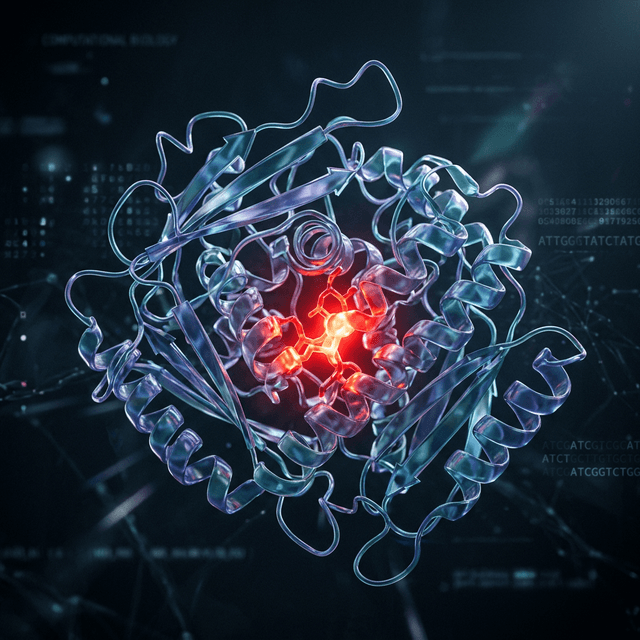
NOW WE CAN.
Computational Mutation Intelligence
We’ve integrated millions of protein structures, clinical variants, and computational predictions to learn the generalizable rules by which mutations alter protein behaviour. Using those learned rules, ProteinMutex can assess the impact of novel mutations across stability, pathogenicity, and structural context—in seconds.
Molecular Insight Roadmap
A scientific pipeline designed for precision. From sequence ingestion to structural impact synthesis.
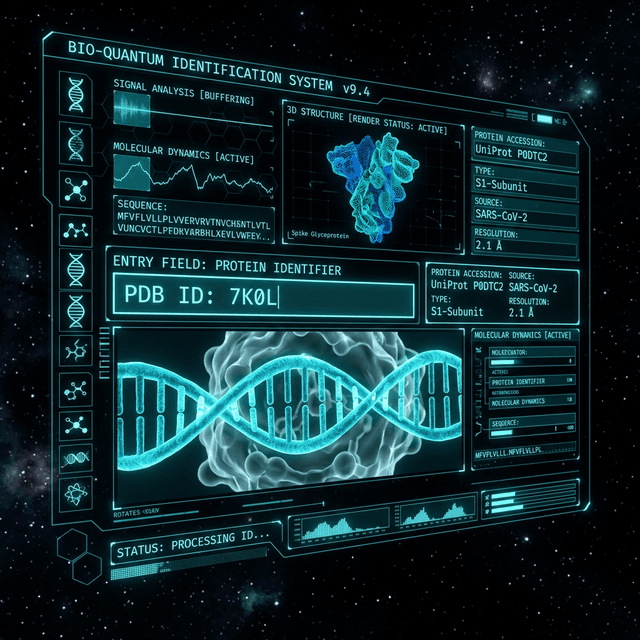
Input Protein Identifier
Enter a UniProt ID or gene name. The platform fetches sequence data and primary structural metadata in real-time.
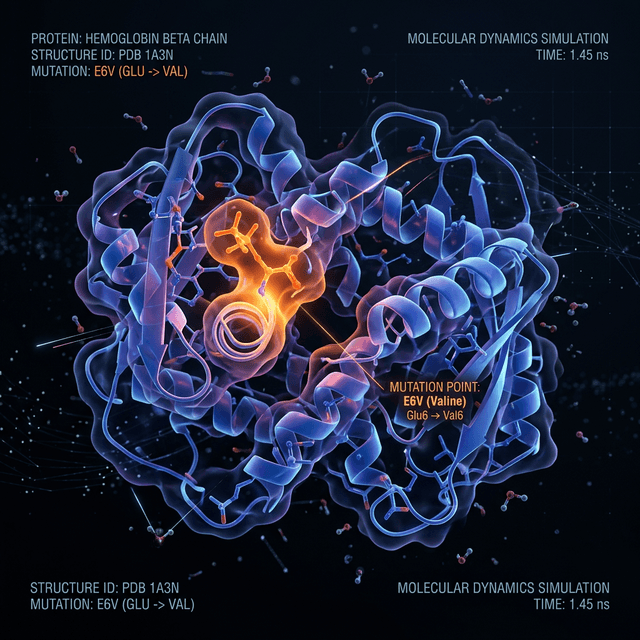
Specify Mutation
Define substitutions using HGVS notation. Map multiple variants simultaneously to assess combinatorial thermodynamic effects.
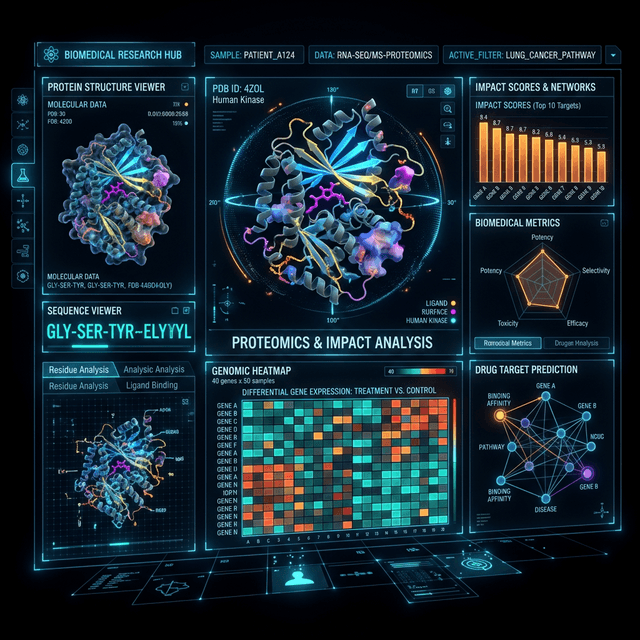
Analyze & Visualize
Interact with structural impact maps. Examine stability shifts, steric clashes, and conservation scores in our unified studio.
Molecular Engineering Suite
A comprehensive ecosystem for structural synthesis and mutation impact quantification.
Structural Dynamics
Real-time vertex-level analysis of conformational shifts and amino acid substitutions.
Structural Stability Prediction
Estimate changes in protein thermodynamic stability (ΔΔG) upon mutation using energy-based computational methods.
Variant Pathogenicity Scoring
Score mutation pathogenicity using integrated computational predictors including SIFT, PolyPhen-2, and CADD.
Interactive 3D Visualization
Rotate, zoom, and inspect mutated residues in full 3D with cartoon, surface, and ball-and-stick representations.
Mutation Hotspot Detection
Identify statistically significant mutation clusters across protein structures using spatial clustering algorithms.
Conservation Analysis
Analyze evolutionary conservation of mutated residues using multiple sequence alignments across orthologous species.
Structural Clash Detection
Detect steric clashes and unfavorable interactions introduced by amino acid substitutions in the protein structure.
Unified Access to Biological Databases
ProteinMutex operates as a synthesis engine, orchestrating multi-petabyte datasets into a single, cohesive structural analysis pipeline.

UniProt
Comprehensive protein sequence and functional annotation database with curated reviewed entries.
PDB
Archive of experimentally determined 3D structures of proteins, nucleic acids, and complex assemblies.

AlphaFold DB
DeepMind's AI-predicted protein structures covering over 200 million proteins from UniProt.

GenBank
NIH genetic sequence database with annotated collection of all publicly available nucleotide sequences.
Developer Ecosystem
Built for
Scale.
Connect your existing bioinformatics stack to our high-throughput compute engine via production-ready protocols and native SDKs.
Predictive Engines
Sub-second response times for structural stability and pathogenicity scoring.
REST API Gateway
Production-ready endpoints for seamless integration with bioinformatics stacks.
Dataset Pipelines
Streamline multi-VCF batch processing through automated ingestion.
Job Orchestration
Manage complex computational workflows across distributed clusters.
Live Analytics
Real-time visualization of structural dynamics and impact frequencies.
Distributed Compute
Leverage spatial clustering on GPU-accelerated folding engines.
Well-Characterized Protein Mutations
Explore clinically significant mutations that are frequently studied in cancer research and structural biology.
| Gene | Mutation | Impact | Clinical Significance | Severity | UniProt |
|---|---|---|---|---|---|
| BRCA1 | C61G | Destabilizing | Associated with hereditary breast and ovarian cancer risk | critical | P38398 |
| EGFR | L858R | Activating | Common non-small cell lung cancer driver mutation | high | P00533 |
| KRAS | G12D | Oncogenic | Oncogenic driver in pancreatic and colorectal cancers | critical | P01116 |
| TP53 | R175H | Loss of function | Most frequent TP53 mutation across multiple cancer types | critical | P04637 |
C61GAssociated with hereditary breast and ovarian cancer risk
L858RCommon non-small cell lung cancer driver mutation
G12DOncogenic driver in pancreatic and colorectal cancers
R175HMost frequent TP53 mutation across multiple cancer types
Open Source
Built for researchers.
Open to contributors.
ProteinMutex is an open-source computational biology platform for protein mutation analysis—combining structural context, 3D visualization, and developer-friendly workflows. Free for academic and non-commercial research use.
Free to use. No subscriptions. No credit card required.